The real choice: icons or context
At 9:12 a.m., I watched a couple at Plaça de Catalunya pinch-zoom a map until the street names turned into a gray blur, then hesitate with a half-bought coffee in hand. Their notes had the usual hits—Sagrada Família, Park Güell, “Gothic Quarter”—but the metro arrows made everything look equally close. That’s the trap: on a screen, icons and neighborhoods weigh the same, even though your feet and the ticket queues disagree.
Barcelona’s real choice on a short first trip isn’t “what’s best,” it’s whether you want your memories to be dominated by two or three headline places (with timed entries, security lines, and surge-hour crowds) or by the connective tissue that makes the city feel lived-in. The icons reward commitment—morning slots, prebooked tickets, and a willingness to move on when the flow turns sticky. Context rewards flexibility: you can duck into a small church, linger in a shaded square, or reroute when you realize you’re walking uphill again.
For a mid-budget couple with three days, the sweet spot is mixing both: pick a few paid, timed “anchors,” then pad them with low-friction wandering that doesn’t punish you for showing up 20 minutes late. It won’t feel perfectly efficient, but it will feel like Barcelona rather than a checklist.
Old Barcelona in the Gothic Quarter
At 10:47 a.m., I stepped off the Jaume I metro and my map immediately lied to me: the cathedral looked “two minutes away,” yet every alley bent just enough to turn it into a small scavenger hunt. A delivery guy threaded past with a hand truck, and I had to flatten against a stone wall that felt cool even in July. It was the first hint that the Gothic Quarter isn’t a sight you “do”—it’s a pace you accept.
If you want Old Barcelona without paying in queue-time, aim for the quarter early (before 11) or late afternoon, when the cruise-day swell thins and the streets feel less like a moving hallway. The Barcelona Cathedral is worth a peek for the cloister geese and the vertical drama, but it’s a trade-off: you’ll spend money and time on security, and it competes directly with your best wandering hours. For many couples, the better value is stitching together free or low-friction stops—Plaça del Rei for medieval gravitas, a glimpse of the Roman wall fragments near Plaça Nova, then a quiet sit in Plaça Sant Felip Neri where the noise drops a full notch.
Keep one limitation in mind: the Quarter rewards short hops, not long marches—choose a small loop and let yourselves get “lost” inside it, instead of chasing pins across neighborhoods. If you’re deciding between one interior and pure street-level atmosphere, pick the interior only if you’ll arrive at off-peak timing; otherwise, spend that patience on a slower lunch and a second pass through the lanes.
Gaudí that reshapes your whole trip
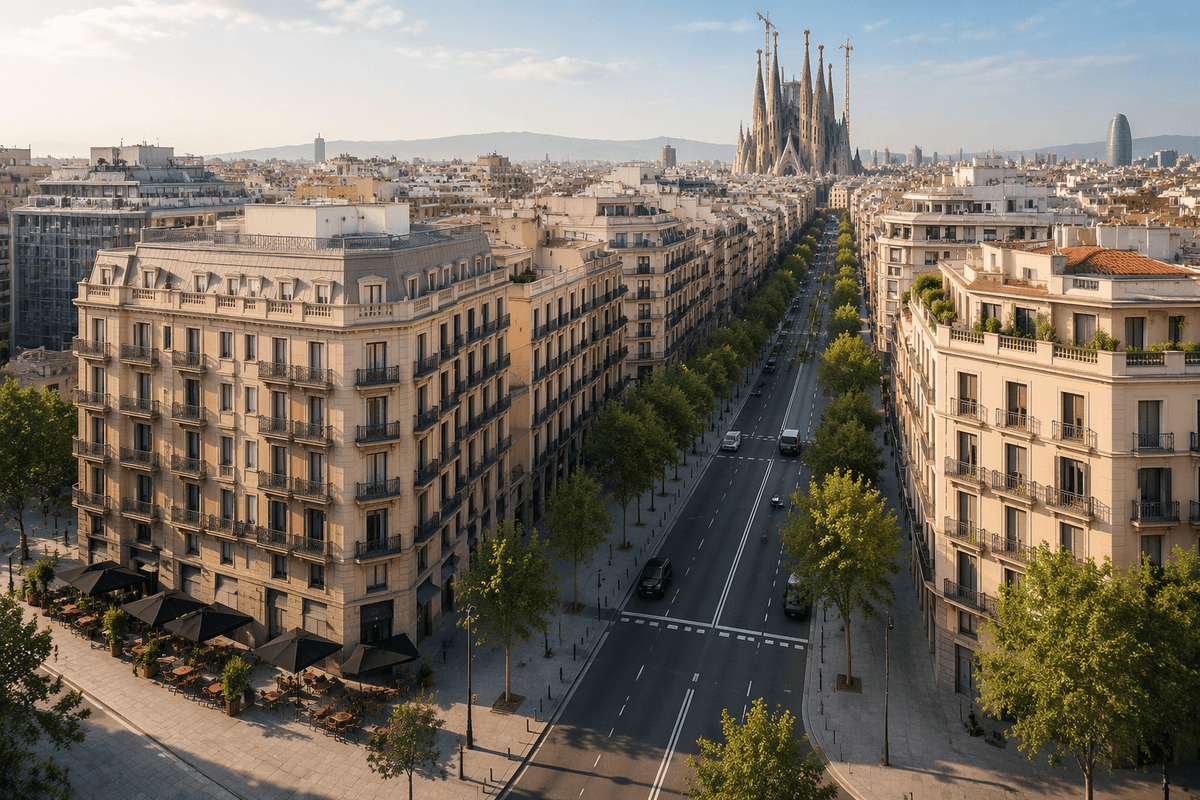
At 8:05 a.m., I stood outside Sagrada Família with a timed ticket on my phone and still hesitated at the wrong side of the fence line, watching two separate queues braid and unbraid like they belonged to different buildings. A tour group poured in behind me, earbuds already in, and the security check clicked along at a pace that felt brisk until you remembered how fast a morning disappears in Barcelona. Even with a reservation, Gaudí makes you negotiate with time.
Sagrada Família is the anchor that can quietly re-route your whole trip, mostly because it doesn’t sit “near” anything you’ll casually stumble into. It works best for couples who can commit to an early slot and treat the surrounding Eixample grid as part of the experience—wide sidewalks, cafés, and a clean reset after the Gothic Quarter’s squeeze. You’re paying to be on a schedule, and if you miss your window you don’t get to bargain with the door. If you’re trying to avoid line-hours, this is the Gaudí site to prebook first, then build the rest around it rather than stacking other must-dos on the same morning.
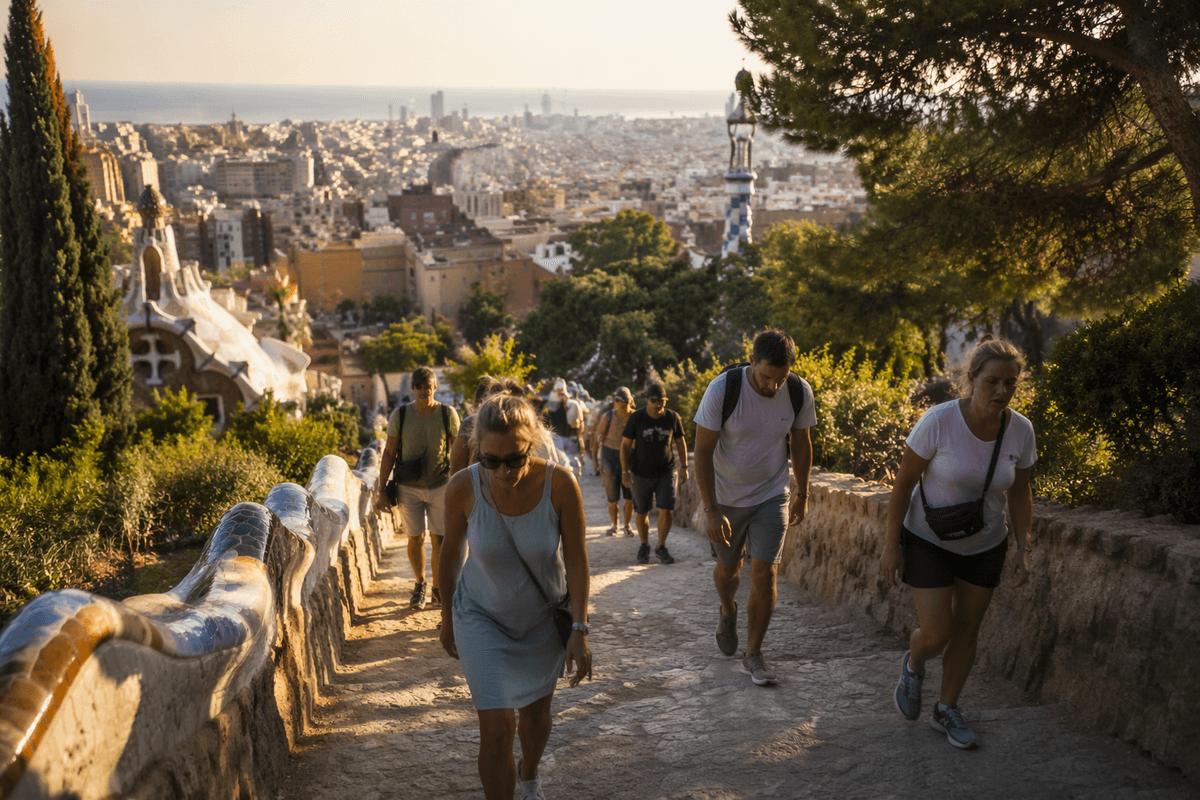
Park Güell looks like a quick detour on a map, but the hill is the real ticket—fine if you’re fresh, punishing if you’ve already walked ten “small” kilometers. On a three-day trip, I’d pick one Park Güell moment (sunset views or a calmer morning) or one Gaudí house (Casa Batlló or La Pedrera) for a more controlled, weather-proof visit. Either way, decide before you’re tired enough to let convenience choose for you.
Picasso and Palau, back-to-back
At 12:18 p.m., I watched the Picasso Museum ticket page spin on a weak café Wi‑Fi while a line formed anyway—two parallel versions of “waiting,” one digital, one physical. A guard kept repeating “only timed entry,” and a couple in front of me tried to negotiate in the shade like the sun was part of the terms. It was the clearest reminder that art museums in Barcelona can feel less like spontaneity and more like logistics.
The Picasso Museum works best if you already like early-period Picasso and you’re willing to move at museum pace through tight rooms that can bottleneck when school groups land. It’s not the place for a dreamy, empty-gallery mood; it’s more like reading someone’s origin story while other people turn the pages. If you’re on a three-day trip and you want one “serious” art stop, it earns its spot—just book a timed ticket and aim for an earlier slot so you’re not spending your best afternoon energy in crowd flow.
Palau de la Música Catalana pairs beautifully right after because it flips the experience: less narrative, more instant wow. The trade-off is scheduling—tours and concert times don’t care about your tapas plans—yet the payoff is that you can be in and out in a controlled window. If you’re choosing, Picasso is for art-first travelers; Palau is for anyone who wants one extravagant interior without donating half a day to queues.
What I’d pick with one day
At 7:58 a.m., with a bakery coffee still too hot to drink, I’d lock in an 8:30-ish Sagrada Família slot and treat that ticket time like a flight. The line will still exist, just shorter and less cranky than mid-morning. When you walk out, it’s tempting to stack more “musts,” but the day goes sideways fast if you chase them in the wrong order.
If I had one day and wanted five cultural hits without donating hours to queues, I’d do: (1) Sagrada Família early (prebook), then a quick reset café in Eixample; (2) a compact Gothic Quarter loop—Plaça del Rei to the Roman wall fragments to Plaça Sant Felip Neri—because it’s high atmosphere per minute and doesn’t require perfect timing; (3) Picasso Museum with a timed entry around late morning (prebook, and accept tight rooms); (4) Palau de la Música Catalana on a scheduled tour right after lunch, since it’s a controlled “wow” that doesn’t sprawl; and (5) one Gaudí interior like La Pedrera or Casa Batlló late afternoon, which stays satisfying even if the weather turns or your feet start negotiating.
The trade-off is rigidity where it matters (Sagrada, Picasso, Palau) and flexibility where it saves you (the Quarter). If you’re already tired by 4 p.m., I’d skip the uphill viewpoint chase and keep the last stop indoors—your future selves will remember the ceilings more than the commute.




![Learn to Invest by Yourself [Beat the Market With Investing Basics]](static/image/2026/07/14/0c228cd1-fbac-42e5-9480-a2074601a70d.png)