The real choice: schedule or airline hype
At 23:18, with three tabs open and a half-packed carry-on on the floor, I hovered over an airBaltic fare that looked “A220 everywhere” on the route map—but the connection in Riga was 45 minutes. The price was clean until I clicked through and watched the baggage line item appear like an afterthought. It felt like choosing between a promise and a clock: the marketing was loud, the schedule was what would actually move me.
If you’re booking 2–6 weeks out for a 3–7 day summer break, the real edge isn’t airline hype; it’s the specific departure time and how much slack you’ve bought yourself. A shiny fleet story can’t rescue a tight inbound that lands into a crowded Riga wave, where one slow bus-to-stand transfer turns “legal connection” into a sprint. Compared with chasing the lowest fare, paying a bit more for a later Riga bank or a longer layover can be the cheaper choice once you price in rebooking stress and lost hotel nights.
AirBaltic’s A220 narrative matters only insofar as it supports the timetable you need: more frequencies can mean better recovery options when something slips, but it doesn’t erase summer weather, ATC slots, or peak-hour congestion. This works best for travelers who value simple, predictable routing via Riga and can pack light; it’s less friendly if you hate fee menus or you’re betting your whole trip on a single short connection.
More A220s, more routes that matter
I zoomed in on the timetable and watched the route map stop being a slogan: the 06:10 out of HEL existed on Tuesdays, but the return I actually wanted only showed up on Friday and Sunday. “More A220s” looked like blanket coverage until you compared days-of-week and realized the extra metal mostly shows up as better placement in the Riga banks, not nonstop miracles. For a 3–7 day trip, that calendar friction matters more than the aircraft type printed on the boarding pass.
Where the growing A220 fleet does help is on the boring-but-useful routes that feed Riga: more consistent aircraft planning can translate into more sensible frequencies at commuter-ish hours, which gives you alternate same-day options when one leg slips. Compared with a mixed fleet carrier, a single-type operation can be easier to rotate without cascading crew/equipment mismatches—yet it’s still bounded by slot times, summer ATC flow, and how tightly airBaltic stacks arrivals. It works best if you’re routing between Northern Europe and the Baltics/Nordics and you’re happy treating Riga like a hub rather than chasing a fragile “perfect” connection.
What it doesn’t automatically change: ground handling speed, bus-gate delays, or how fast a disrupted evening bank can fill up once everyone is rebooked. If you’re booking 2–6 weeks out, the practical play is to pick days with at least two viable same-day departures on your short leg, then build a connection that survives a 15–25 minute wobble. The fleet expansion helps your options; it doesn’t remove the trade-off between tight routing and recoverability.
How A220 comfort changes short hops
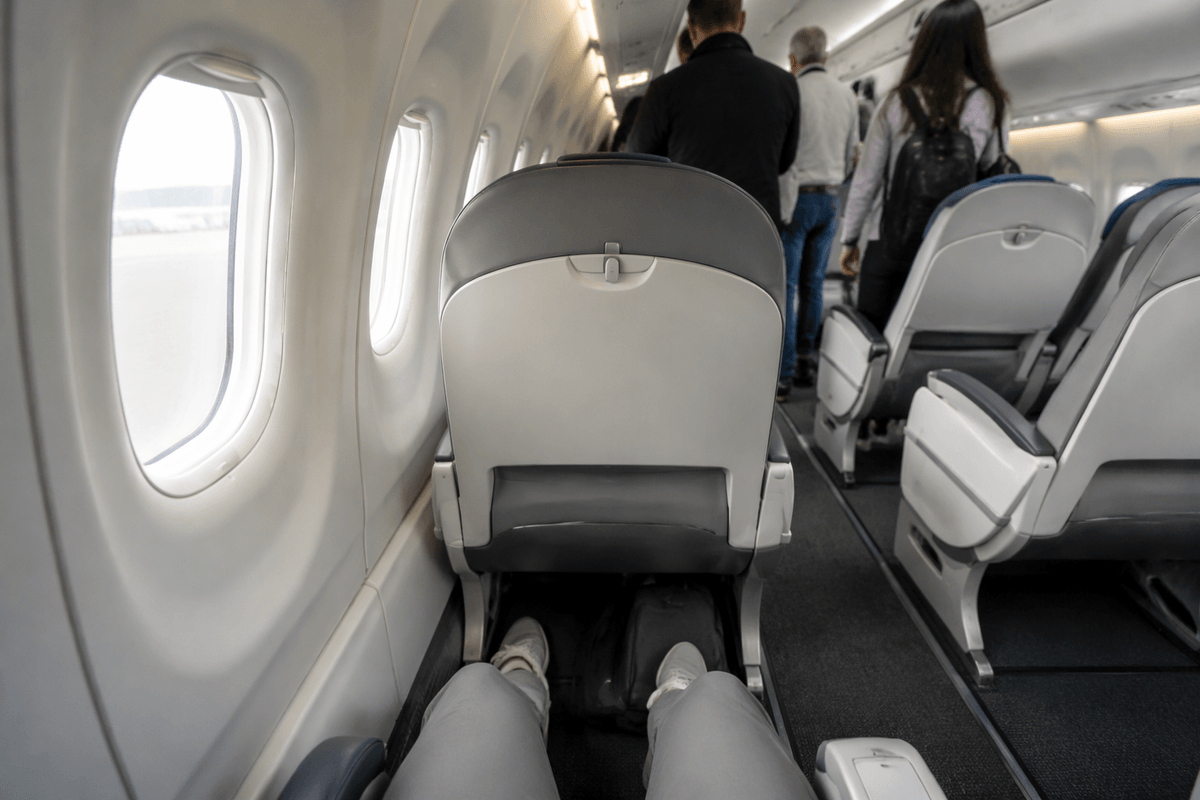
At the gate, the moment I noticed it wasn’t a lounge or a welcome drink—it was that familiar “regional jet crouch” that never happened. I slid into a window seat with a backpack under the seat and didn’t have to angle my knees like I was bracing for turbulence. On a 50–90 minute hop into Riga, that difference feels less like luxury and more like arriving with your shoulders still in the right place.
The A220’s cabin is a small upgrade where short-haul usually punishes you: wider seats than the tightest 3–3 narrowbodies, bigger windows, and—crucially—no middle seat on the 2–3 side. Compared with older regional aircraft, the bins tend to cope better with normal carry-ons, which matters when you’re trying to dodge checked-bag fees and the “will my bag make the connection?” anxiety. None of this fixes peak boarding friction: if your flight is full and you’re late in the queue, you can still get gate-checked, and that’s where a 45-minute Riga connection starts to feel like a bet.
For mid-budget summer trips, comfort is really about fatigue math. If you’re doing two legs in a day, the A220 makes the first one less draining, and that can be the difference between calmly following signs at Riga versus rushing the bus gate with everyone else. It works best for travelers packing light and boarding earlier; if you need a full-size roller and hate paying for priority, the comfort bump can be offset by the scramble.
Reliability: fewer swaps, smoother operations

At 05:42 in the terminal, the screen flicked from “Gate C12” to “TBD,” and that tiny wobble was enough to make me check the app twice. What I was really looking for wasn’t a miracle on-time stat; it was the absence of chaos—no sudden aircraft change, no seat reassignment, no “sorry, overhead space is limited” announcement that turns into forced gate-checks. A summer hub connection feels different when the operation is calm versus when it’s improvising in public.
This is where a big A220 footprint can translate into a practical reliability gain: fewer fleet types usually means fewer last-minute swaps when something goes tech, and fewer domino effects from “wrong aircraft, wrong crew qualification, wrong spare part.” Compared with airlines juggling multiple short-haul types, a single-type plan is easier to reshuffle inside a Riga bank without completely breaking rotations. The limitation is obvious once you watch the wave build: ATC flow restrictions, thunderstorms, and packed stands don’t care what’s on the tail, and a bus-gate delay can erase most of your buffer in one go.
For a 3–7 day trip booked 2–6 weeks out, the trade-off is between the tight “clean” connection and the one that can absorb a 20-minute slip. If you need predictability, aim for routes/days where there’s at least one later same-day option on the short leg, and avoid being the last arrival into Riga if missing it would strand you overnight. It’s not glamorous, but it’s the kind of reliability you actually get to use.
What I’d book for a summer trip
I hit “continue” on a Thursday night fare and watched the price jump the moment I added a 23 kg bag and a standard seat. The connection via Riga was still showing 45 minutes, but now the “cheap” ticket was only cheap if I traveled like a minimalist and boarded early. That was the tell: the aircraft story is nice, yet the booking friction is where the trip gets won or lost.
For a 3–7 day summer break, I’d book the flight pattern, not the headline: pick a departure that lands into Riga with at least a 70–90 minute buffer if your inbound is a morning wave prone to ATC holds, bus gates, or slow stand turns. I’d also bias toward days where there’s a later same-day back-up on the short feeder leg, because the A220-heavy operation helps most when recovery options exist—when the bank is full, “single-type efficiency” still runs into seat scarcity.
Fare-wise, I’d compare “light” versus “classic” (or whatever bundle you’re offered) by pricing the whole trip up front: one carry-on, one checked bag, and the seat you’ll actually tolerate for two legs. If you can pack light and accept no-frills service, airBaltic can be a smart summer play through Riga; if you’re bringing a big case and hate micro-fees, a slightly higher base fare elsewhere may feel cheaper by day two. My cue before paying: would I still be calm if the first leg arrived 20 minutes late?


![Learn to Invest by Yourself [Beat the Market With Investing Basics]](static/image/2026/07/14/0c228cd1-fbac-42e5-9480-a2074601a70d.png)