Why guava feels more filling than most fruits
You bite into a guava and, halfway through, there’s this small pause where your brain expects the “easy” sweetness of fruit—but your mouth is still working. The flesh is dense, the seeds are noticeable, and it doesn’t disappear the way grapes or melon can. That extra chewing can slow the snack down just enough that fullness shows up earlier, even if the portion doesn’t look big.
Part of it is simply structure. Guava’s fiber sits in the fruit itself rather than dissolving into juice, so it tends to take longer to break down in the stomach. That can translate to a steadier, less urgent kind of hunger later on, instead of a quick dip that sends you back to the pantry. People sometimes assume it’s “too sugary” because it tastes bright, but the fiber-and-seed combo can blunt how fast that sweetness hits.
The same seeds and fiber that make it satisfying can feel a little heavy if you’re not used to higher-fiber fruit. If you notice more fullness than expected—or a bit of bloating—it’s often less about sugar and more about how slowly that snack is moving through you.
Guava nutrition facts in practical serving sizes
The first time you try to “count” guava like a packaged snack, it can feel oddly hard—half a fruit looks small, but it sits in your stomach like more. A practical serving for many people is about one medium guava, or roughly one cup of sliced fruit, and that portion tends to bring a noticeable amount of fiber alongside a modest amount of natural sugar.
That mix is why guava often behaves differently than fruit juice or a handful of dried fruit. The fiber slows how quickly the carbohydrates leave the stomach, and the seeds add a bit more drag to digestion, so the sweetness can land more gradually. It also comes with vitamin C in a way you might actually “feel” indirectly over time—less about a sudden boost, more about supporting everyday repair—plus potassium that fits into hydration and muscle function.
Still, serving size can be inconsistent: guavas vary a lot, and a bigger fruit can quietly double what you thought you ate. If your gut is still adapting, that extra fiber may show up first as heaviness, not benefits.
Vitamin C effects you may notice over time
A few weeks into eating guava more often, the “effect” of vitamin C usually doesn’t feel like energy. It’s more like you notice what isn’t happening: small mouth irritations calm down faster, your skin feels a bit less cranky after sun or dry air, and minor nicks don’t seem to linger as long. Those are subtle, and easy to miss if you’re also changing sleep, hydration, or stress at the same time.
That’s because vitamin C is part of the behind-the-scenes repair work, helping your body maintain connective tissue and manage everyday oxidative wear. In real life, it may show up as steadier “baseline” resilience rather than a clear moment of improvement.
If you eat guava right after a refined-carb snack, any calmer feeling later can be mistaken for the vitamin C, when it may be the fiber slowing the whole swing. Over time, the pattern tends to matter more than the single serving.
Fiber and gut rhythm: benefits and surprises
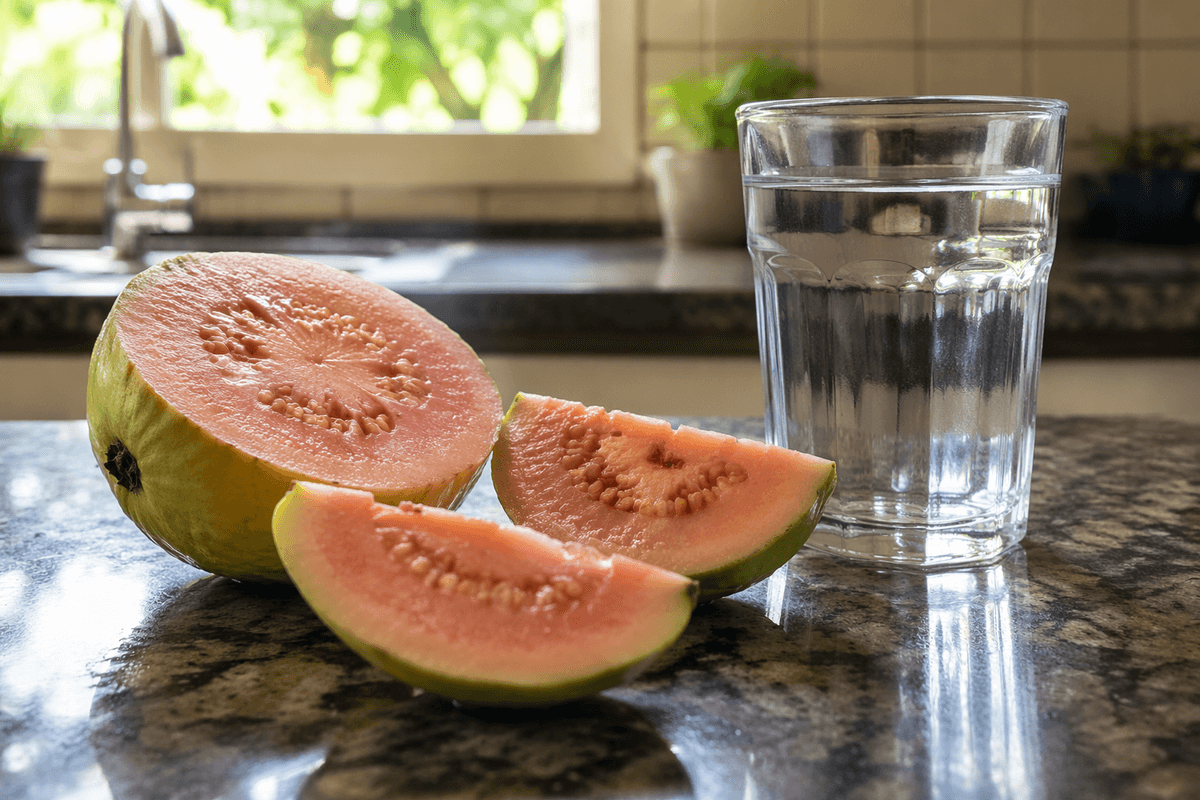
You might notice it first the next morning, not at snack time: things feel a little more “scheduled,” or they don’t. Guava’s fiber is the kind that tends to hold onto water and add bulk, which can make stool easier to pass for some people—but if you’re coming from lower-fiber, refined snacks, that same bulk can briefly feel like extra pressure or a slow, full belly.
The surprise is that more fiber doesn’t always mean faster. When guava’s dense flesh and seeds move through a gut that’s still adapting, it may shift timing in either direction: a more regular rhythm for some, or a day of unpredictability for others. Gas can show up too, especially if the rest of your day is low in fluid or you eat guava quickly and “stack” it on top of other fibrous foods.
Over time, the steadier pattern many people notice isn’t dramatic—it’s fewer urgent swings between “nothing happening” and “suddenly now.” But it can stay inconsistent if portions vary from fruit to fruit.
Blood sugar steadiness and post-snack energy
It often shows up in the hour after: you realize you haven’t started scanning for something else yet. With guava, the sweetness is there, but it tends to arrive packaged in dense flesh and fiber, so the carbohydrates may move out of the stomach more slowly. For a lot of people, that means fewer of the quick “up then down” feelings they associate with fruit—less of the bright spike followed by a flat, snack-hunting slump.
The steadier energy isn’t just about sugar, either. Fiber can change how fast glucose reaches the bloodstream, and guava’s structure makes it harder to eat mindlessly fast. Potassium can support normal fluid balance and muscle function, which sometimes gets misread as “better energy” when it’s really fewer little dips from dehydration or a salty, refined snack earlier.
A larger guava, a very ripe one, or eating it alongside a sweet drink can shift the outcome. If you notice jitters or a sudden crash, it may be the combo and timing—not guava by itself.
Antioxidants and skin: subtle daily-level influences

You notice it when you wash your face at night: the skin doesn’t feel quite as tight, or a little red patch doesn’t look as loud. It’s easy to credit the “antioxidants” in guava, but day to day, skin is more like a mood ring for sleep, stress, sun, and what your digestion has been doing.
Still, guava’s vitamin C and carotenoids are part of the background maintenance—helping your body deal with everyday oxidative wear and supporting the scaffolding that keeps skin feeling resilient. In real life, that may look less like a glow and more like fewer small setbacks: irritation settling sooner, dryness feeling less stubborn, or post-sun discomfort not hanging around as long.
If guava’s fiber makes you a bit gassy or “full,” that can show up as puffiness or a dull look the next day, even while the nutrients are doing useful work underneath. The pattern over weeks usually tells you more than a single snack.
Choosing, storing, and eating guava comfortably
The moment guava disappoints people is usually at the counter: it feels rock-hard, or it perfumes the kitchen and then tastes oddly flat. A guava that gives slightly to pressure tends to be easier to chew and gentler on the stomach, while very firm fruit can feel dry and “work-y,” which makes the seeds stand out more. Very soft, deeply fragrant guava can be sweeter and easier to eat quickly—sometimes a little too quickly, if you’re using it as a steadier-energy snack.
Storage changes how it lands. Letting guava ripen at room temperature can make the flesh softer and less effortful, but once it’s ripe, cold storage usually slows the slide into mush. That matters because mushy guava can feel like it should be “light,” yet it can still carry a lot of fiber—so people sometimes overeat it, then blame the fruit for feeling heavy later.
Comfort often comes down to how you eat it, not whether guava “agrees” with you. If seeds feel irritating, slicing it thin, chewing slowly, or pairing it with something that adds protein or fat can change the pace of digestion. If the pattern is bloating or unpredictability, the simplest explanation is often portion size drifting larger as the fruit gets riper and easier to finish.









![6 Best ButterflyMX Alternatives [Video Intercom Systems]](static/image/2026/07/14/dde0dbcd-f7bc-446a-96b8-3fe8a10457ef.png)