You quit (or consider it) and reality hits fast
On paper, the jump looks clean: one last paycheck, a tidy resignation, and “more freedom” on the other side. Then the calendar flips and the noise starts. A client drags payment to net-45, your health insurance quote lands higher than expected, and the week you planned for pitching gets eaten by onboarding, admin, and fixing tiny things no one pays for. Even before quitting, the same pressure shows up as a quiet math problem you keep postponing—how many months you can float, what happens if your biggest lead ghosts, and how much of “your rate” is really taxes and benefits.
If you already left, the first constraint is time: the hours you used to spend doing excellent work now compete with selling, collections, and cash management. If you’re still employed, the constraint is timing: quitting right after a big expense or during a slow season turns a confidence move into a forced-discount spiral. The reality hits fast because the risk isn’t skill—it’s run-rate.
The “rockstar” myth: great work alone won’t save you
The next surprise is that being “the best” doesn’t automatically translate into being “the most paid.” A strong first delivery can still end in a soft no because procurement needs three bids, the budget got reallocated, or the person who hired you left. Meanwhile, the client who loves your work may love it at net-60, with feedback cycles that stretch a one-week project into a month you can’t fully bill.
In a job, great output gets buffered by a salary system. Solo, the buffer is trust plus logistics: who signs the contract, who approves the invoice, who owns the timeline, and how much pain they feel if the work stalls. The constraint is usually not quality—it’s leverage. If your only proof is “I’m good,” you’ll keep getting pulled into spec work, unpaid revisions, and “quick calls” that don’t move a PO any faster.
Rockstars still need boring machinery: clear next steps, payment terms that match your cash runway, and a reason a client can justify buying now at your price.
Run a two-week readiness test before committing
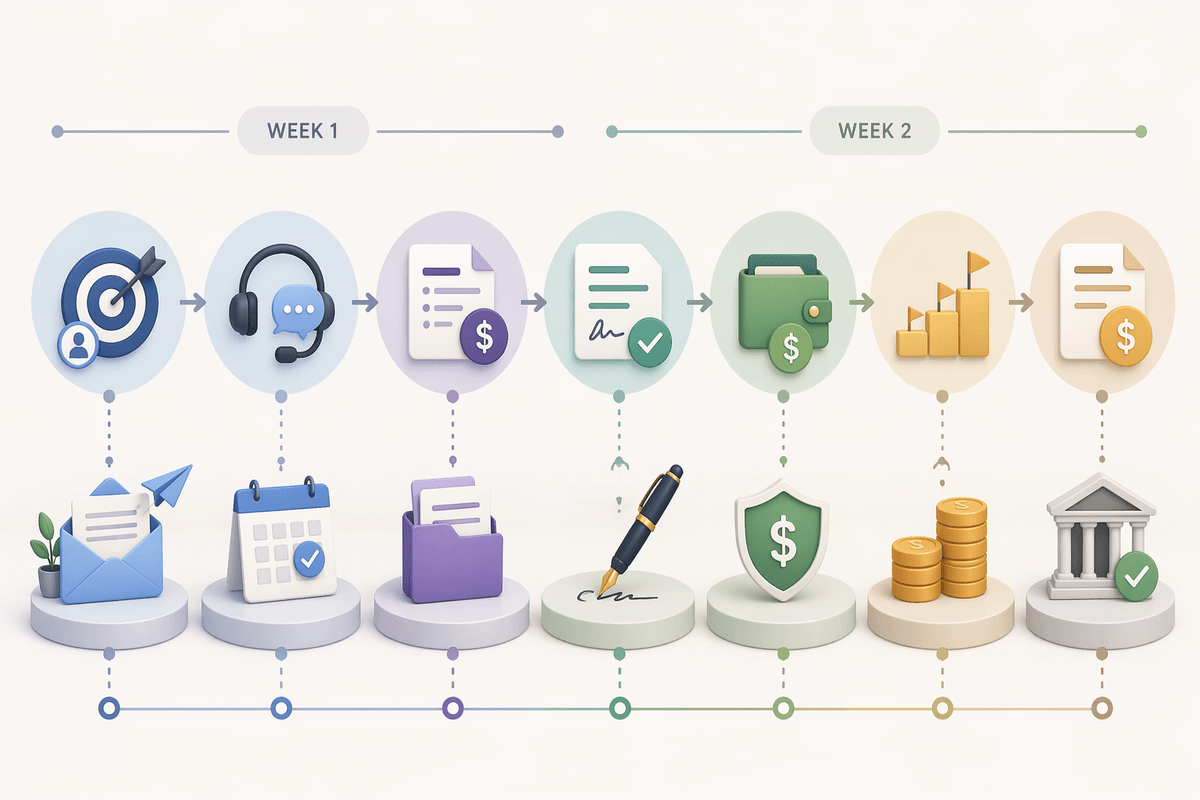
That “boring machinery” is easiest to build while you still have a paycheck, or at least before you burn through the cushion you think you have. Instead of making a clean leap, run a two-week readiness test that forces the real work to show up: selling, scoping, invoicing, and getting a yes from someone who can actually pay. The constraint is attention. If your evenings disappear into “just one more portfolio tweak,” you’re already avoiding the parts that decide income.
For two weeks, treat freelancing like a job with deliverables. Send ten targeted outreach notes to people who buy work (not just admire it), book three short calls, and write two one-page proposals with a price and a start date. Draft your contract, pick payment terms you can survive (deposit plus milestones), and send yourself a mock invoice with the timing you’d expect to collect. If you can’t get a meeting, can’t name a budget owner, or can’t put numbers on paper without flinching, quitting doesn’t fix that—it magnifies it.
What you’re looking for isn’t confidence; it’s signal. A small “yes” with a deposit beats a dozen warm compliments, and it tells you what to tighten before the runway gets expensive.
Pick a positioning lane clients can actually buy
By the end of that two-week test, a pattern usually shows up: the calls that turn into proposals sound nothing like the calls that turn into “let’s stay in touch.” The difference isn’t charm. It’s whether the buyer can quickly place you into a budget line that already exists. When the only thing on offer is “design help” or “marketing support,” the work feels optional, the start date slides, and the negotiation defaults to hourly haggling. The constraint is time-to-decision; a vague role makes the purchase feel risky.
A positioning lane is narrower than a title and closer to a repeatable outcome. Not “frontend dev,” but “ship the billing flow refactor without breaking checkout.” Not “brand strategy,” but “refresh the deck and website before the Series A roadshow.” This is where stability starts: clients buy urgent, nameable projects with owners and deadlines. When you can say who it’s for, what breaks if it doesn’t happen, and what “done” looks like, you get faster yeses and fewer unpaid discovery loops.
The trade-off is that picking a lane means declining work that would pay this week. But it also reduces proposal thrash: you reuse a scope template, you can show similar wins, and you’re not re-teaching clients how to hire you every time.
Price for volatility, not for effort

Once the lane gets clearer, the next pressure is subtler: the price clients accept isn’t a reward for how hard the work feels, it’s a trade for the risk they’re handing you. A “simple” project can still eat three weeks if decisions stall, the stakeholder list grows, or the final sign-off disappears into someone’s inbox. If you price like it’s a clean sprint, one delay turns into a quiet pay cut. The constraint is cash timing—rent and taxes don’t wait for their internal calendar.
So the rate has to carry volatility. Build in a deposit that covers the first week of your time, then milestone payments tied to something you control (a delivery, a handoff, a launch-ready build). If they want flexibility—more meetings, more iterations, more “we’ll know it when we see it”—that’s not free, it’s a different product with a different price. The trade-off is fewer yeses from bargain hunters, but fewer months where you’re booked and still anxious.
When you’re unsure, a useful check is simple: if this client went quiet for ten days, would the deal still make sense? If the answer is no, the price is built on effort, not volatility.
Scope creep is a process failure—design boundaries early
After you raise prices to cover volatility, scope creep shows up as the next leak: not because clients are sneaky, but because no one owns the edges. “Can we also…” starts harmless, then the deliverable turns into a moving target and the timeline stretches past the invoice schedule. The constraint is decision latency—each extra request adds review cycles you can’t force, while your calendar stays blocked.
The fix is less about saying no and more about designing the process so the work can’t silently expand. Put a written “definition of done” in the proposal, name what’s explicitly out of scope, and limit revision loops (two rounds, consolidated feedback, one approver). Make changes a visible transaction: a small change-order template with price and schedule impact, sent the same day. The trade-off is a slightly stiffer sales motion, but fewer projects that turn into unpaid maintenance.
If you feel awkward enforcing boundaries, tie them to timing: “I can add that, but it moves launch by a week or we swap it for X.” Most reasonable clients relax when they see you’re protecting the deadline, not guarding your ego.
Build stability on purpose: pipeline, cash, tax habits
After a few projects, the scary part isn’t landing work—it’s the gaps. One client pauses, another stretches to net-45, and suddenly “booked” doesn’t mean “paid.” Stability comes from treating pipeline like a weekly habit, not a panic response: block two hours every week for outreach and follow-ups, and keep a simple rule that no single client should be more than half your next 60 days of expected revenue. The constraint is energy—selling is hardest when you’re already behind.
Cash needs its own boundaries too. Keep a separate tax account and move a fixed percentage the day money arrives, not when it’s convenient. Pay yourself a steady transfer instead of draining the business account whenever invoices hit, and aim for a one-month buffer before you “upgrade” anything. The trade-off is slower lifestyle growth, but fewer forced discounts when timing breaks.
Once the habits exist, the work feels the same, but the month-to-month stress stops running the show.










![6 Best ButterflyMX Alternatives [Video Intercom Systems]](static/image/2026/07/14/dde0dbcd-f7bc-446a-96b8-3fe8a10457ef.png)