Why bananas feel like a “protein food”
You peel a banana on autopilot, and it feels like you just made a “protein choice.” It’s filling enough to quiet hunger, it travels well, and it has that wholesome reputation that makes it land in the same mental bucket as eggs, yogurt, or a shake.
A big part of the confusion is how your body reads the experience. A banana’s carbs and fiber can take the edge off appetite fast, especially if you’re coming off a long gap between meals or heading into a workout. That steady, not-too-heavy feeling often gets interpreted as “this must have protein in it,” even though that sensation can come from calories and volume, not protein density.
There’s also the routine effect: when you eat the same “healthy” food daily, it starts to represent an entire nutrition goal. If energy dips later or you’re hungry again soon, it may not be because the banana was “bad”—it may just be that the protein part of the plan never actually showed up.
What you actually get: protein versus calories
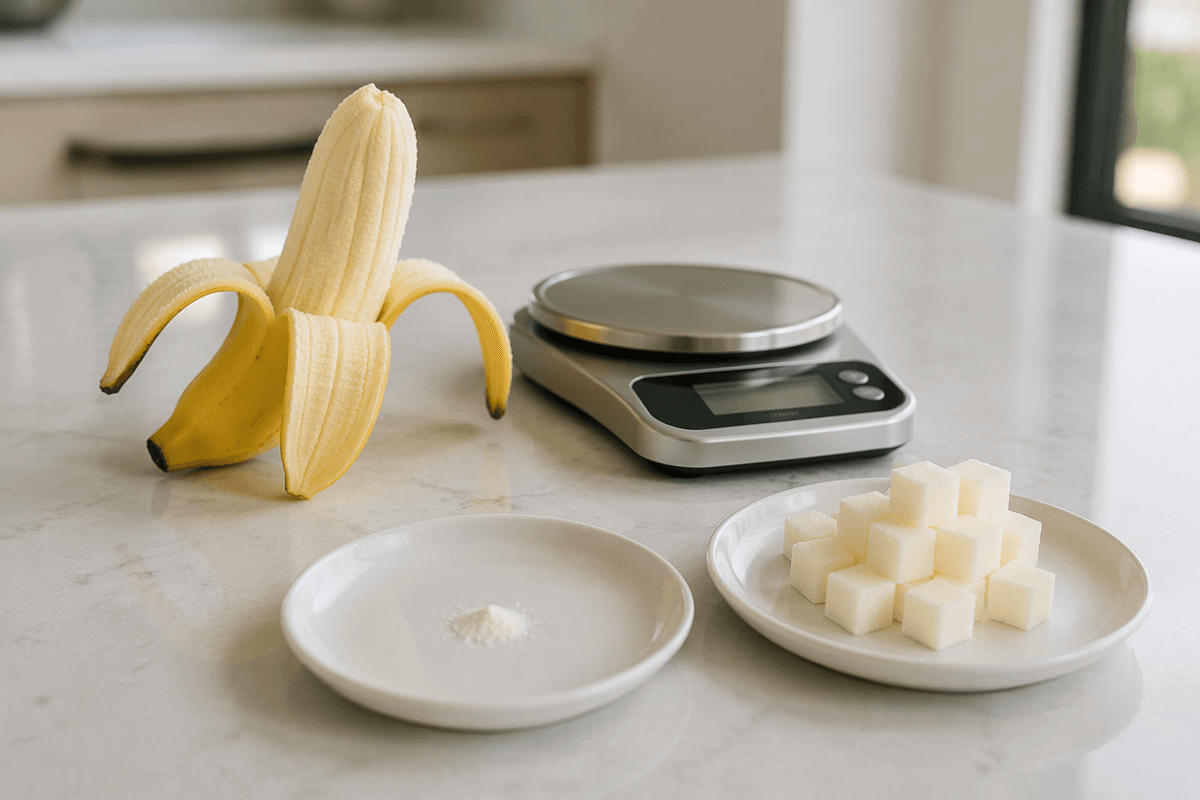
It’s an easy mistake to make in the moment: you finish the banana and feel “handled” for a while, so it seems like it must have covered something substantial. But what it covered most reliably was calories from carbohydrate (and a bit of fiber and water), not much protein.
In practical numbers, a medium banana typically lands around 100-ish calories and about 1 gram of protein. That’s not zero, but it’s small next to what most people mean when they say they’re trying to “get enough protein” for workouts or fullness. If your day’s target is anywhere in the neighborhood of 70–120 grams, the banana’s contribution is more like background noise than a building block.
This is why the signals can feel mixed. If you eat a banana alone and you’re hungry again quickly, it may not be a willpower issue—it may just be that the meal didn’t include enough protein to slow how fast hunger returns. On the flip side, if the banana sits well before a workout, that can be a carb-timing win even when the protein math is still basically unchanged.
How daily habits shape protein totals over weeks
It usually shows up in hindsight: you look back on a week and realize the “protein days” didn’t feel much different from the others—because the pattern was mostly the same banana, same sandwich, same snack rhythm. A banana can become the anchor of the routine, and anchors feel heavier than they are.
The math is quietly consistent. If a medium banana gives you about 1 gram of protein, eating one most days adds up to roughly 7 grams across a week. That’s not nothing, but it’s tiny compared with the 70–120 grams many people are aiming for per day. Over time, totals are shaped less by one repeat food and more by whether each meal has a clear protein “center,” not just supportive calories.
That’s where the body signals start to make sense: getting hungry soon after breakfast, stretching meals farther apart than you meant to, or feeling like workout recovery is unpredictable can be less about the banana itself and more about what regularly follows (or doesn’t) in the next few hours.
Where bananas help indirectly in higher-protein eating
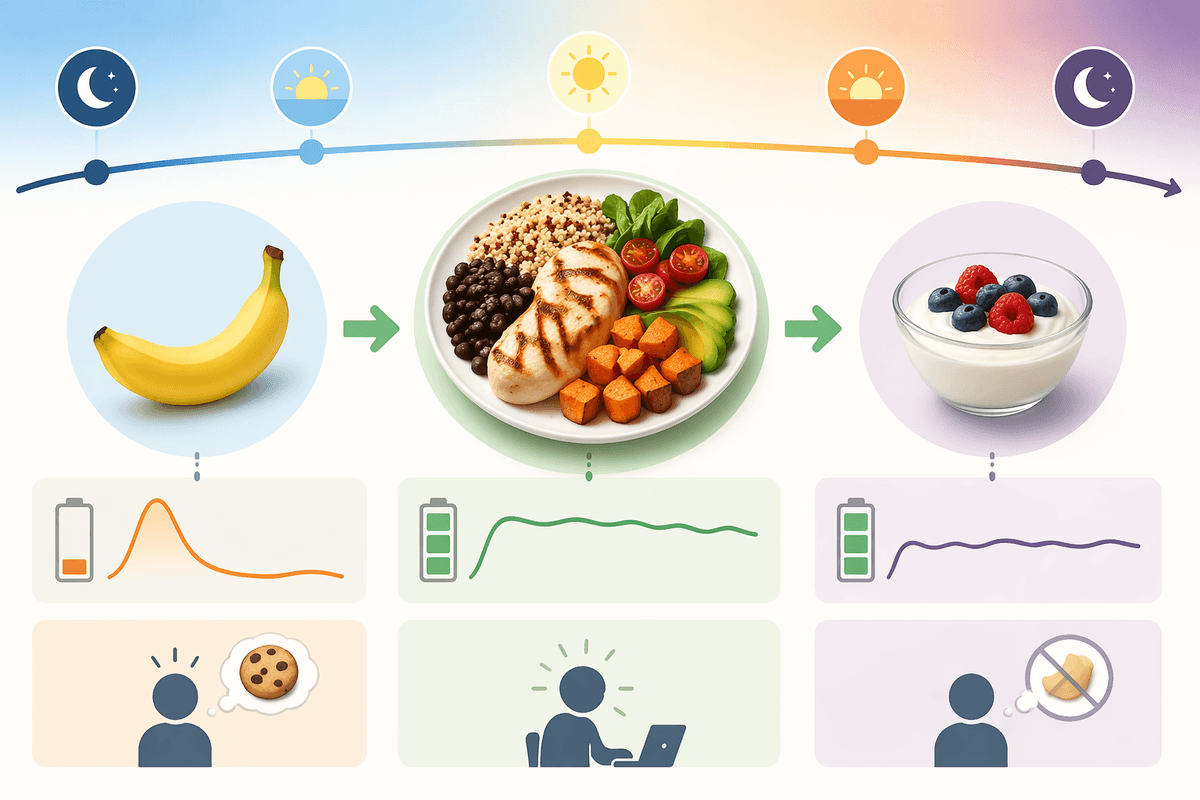
Sometimes the banana “works” best when it’s not trying to do the protein job at all. You eat it on the way out the door, and it buys you enough steadiness to make a better next decision—like ordering an actual lunch instead of limping to midafternoon on coffee and whatever’s in the break room. The banana didn’t raise your protein total much, but it may have kept the day from sliding into a long, hunger-driven gap where protein tends to get missed.
That’s the indirect value: it’s quick carbohydrate that can smooth the edges of appetite and energy so you don’t arrive at the next meal feeling frantic. When you’re overly hungry, you’re more likely to grab the easiest calories first, and protein often becomes an afterthought because it takes more effort, costs more, or simply isn’t sitting there ready. A banana can reduce that “urgent snack” feeling, which makes it easier to include a protein food when you actually sit down.
It’s also one of those foods that pairs without feeling heavy—especially around workouts—so it can act like the easy half of a more complete snack. The only catch is that the pairing isn’t automatic; if the banana becomes the whole plan, the day can still look “healthy” while the protein math stays basically unchanged.
When the banana crowds out protein by accident
It’s usually a small swap you barely notice: you grab the banana because it feels lighter than “real breakfast,” or you eat it first and realize you’re not as interested in making eggs or yogurt afterward. The banana did its job—took the edge off—so the higher-effort protein option quietly gets delayed, and sometimes it never happens.
This is where people get tricked by comfort and convenience. A banana is easy to chew, easy to digest, and reliably soothing when you’re a little underfed. But because it’s mostly carbohydrate, it can raise energy quickly without doing much for the slower, steadier fullness that tends to come from a meaningful protein portion. If your next meal is hours away, that “handled” feeling can fade fast, and you may end up patching the gap with another quick carb snack instead of a protein-based one.
If breakfast becomes banana + coffee, or your afternoon “snack” becomes a banana that replaces what used to be yogurt, cottage cheese, or a turkey roll-up, the day can look healthy while protein totals drift lower. The banana isn’t the problem; it’s the way it can accidentally take the slot where protein would have been most efficient.
Protein needs vary, and context changes the math
You notice it most on the days you do “the same breakfast” but feel completely different by 11 a.m. One morning the banana holds you over, and another morning you’re distracted by hunger like you never ate. That mismatch is often the hint that the question isn’t whether bananas have protein—it’s whether your day is asking for more of it.
Protein needs aren’t one-size-fits-all, and your context quietly changes the math: body size, age, training volume, and whether you’re trying to stay full on fewer calories all push the number around. If you’re aiming anywhere near 70–120 grams per day, a banana’s ~1 gram barely moves the needle. But if lunch is protein-heavy and dinner is solid, that “tiny” gram may not matter; if your meals are lighter or spaced far apart, it can.
What tends to show up first isn’t a number—it’s a pattern. If a banana alone leaves you prowling for snacks, or workout recovery feels inconsistent, it may be less about the banana and more about how often a real protein portion actually lands in the day.
A clearer way to think about banana’s role
It can feel oddly satisfying to realize the banana wasn’t “failing” you—you just asked it to do a job it isn’t built for. The calm, steady feeling after eating one often comes from quick carbohydrate and a bit of fiber, not from a meaningful protein dose. That’s why you can feel fine for a while and still end up hungry sooner than you expected if the next meal is far away.
A clearer mental model is: banana = reliable fuel, not a protein anchor. Its ~1 gram of protein is more like a rounding error compared with day-level goals in the 70–120 gram range, so your protein outcome is decided elsewhere—by whether breakfast, lunch, and dinner each contain an obvious protein “center,” and whether snacks sometimes patch gaps or accidentally replace that center.
So the useful question becomes less “Does my banana have protein?” and more “Did my routine include protein soon after?” If you regularly feel snacky, foggy, or strangely sore on the same banana habit, it may be your pattern—not the fruit—asking for a clearer protein moment.
![6 Best ButterflyMX Alternatives [Video Intercom Systems]](static/image/2026/07/14/dde0dbcd-f7bc-446a-96b8-3fe8a10457ef.png)







![Learn to Invest by Yourself [Beat the Market With Investing Basics]](static/image/2026/07/14/0c228cd1-fbac-42e5-9480-a2074601a70d.png)