What “smart breakfast” usually means in real life
It usually shows up around 10:30 a.m.: you’ve already “done breakfast,” but you’re scanning the kitchen anyway, half‑focused, looking for something crunchy or sweet. A lot of people blame willpower in that moment. More often, it’s just the kind of breakfast that went down fast—toast, a muffin, a granola bar—giving you quick fuel but not much that slows the exit.
In real life, a “smart breakfast” isn’t a perfect macro plan. It’s a meal that buys you time. When breakfast is mostly rapidly digested carbs, blood sugar and appetite signals can rise and fall more sharply, and hunger can feel urgent instead of gradual. That swing is also where random snacking starts to feel “necessary,” even if you ate a normal amount.
Oatmeal tends to change the rhythm because it brings soluble fiber that holds onto water and thickens as it sits. That slows how quickly the meal moves and gets absorbed, which many people notice as steadier energy and a fuller, calmer stomach. It’s not always immediate or consistent, but when it works, the main clue is simple: you stop thinking about food for a while.
Slow-digesting carbs that feel steadier than toast
The difference often shows up in your hands before it shows up on a glucose graph: toast feels “light” and easy to finish, while oatmeal can feel like it’s still there 20 minutes later. That lingering isn’t heaviness for the sake of it—it’s pacing. Many quick breads and pastries break down fast, so the body gets a quicker rush of fuel and then a quicker drop, which is why hunger can feel sudden rather than slowly building.
With oats, the starch is tucked into a thicker, wetter structure, and the soluble fiber (the gel-forming kind) tends to slow how quickly that breakfast leaves the stomach and gets absorbed. In practice, people often notice fewer sharp cravings, less “snack panic,” and a more even slide into lunchtime. It can be inconsistent—stress, short sleep, or a rushed portion can still leave you hungry—but the pattern is usually timing: hunger arrives later, and it’s quieter.
That same slow-move quality can spill into digestion. When breakfast isn’t racing through, bathroom regularity can start to look more predictable over a couple weeks, especially if your usual morning is dry carbs and coffee. It’s subtle, but it’s one of the clearest signs the meal is behaving differently.
Fullness isn’t just volume—it’s how oatmeal behaves
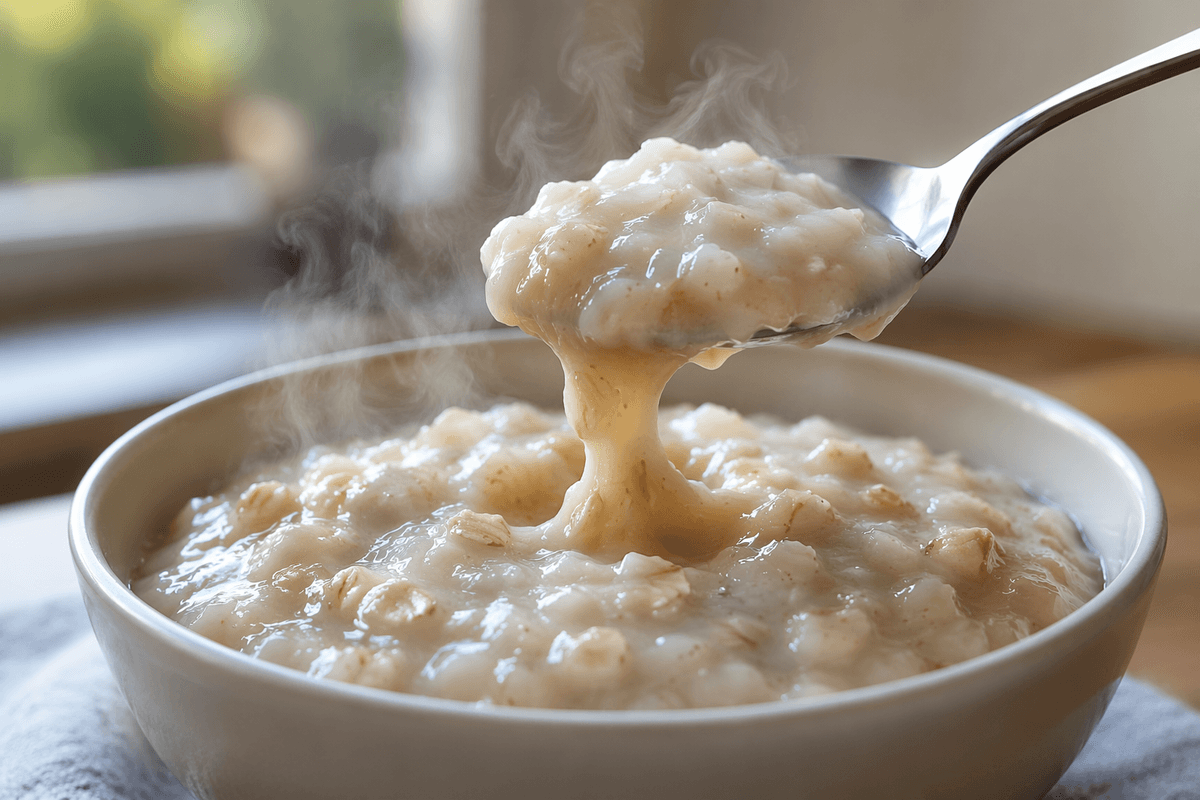
Sometimes the first sign you chose well isn’t “I’m stuffed,” it’s that you get to late morning and realize you never did the usual mental math about snacks. That can feel surprising because the bowl didn’t look huge—especially compared to a bagel or pastry that disappears in three bites.
Oatmeal tends to “act” different once it hits liquid. The soluble fiber (often experienced as that creamy thickness) holds water and turns the meal into something more gel-like, so it lingers and releases energy more gradually. In real life, that can mean hunger comes on slower, cravings feel less sharp, and your stomach feels occupied without feeling heavy. It’s not perfectly predictable—sleep, stress, and how fast you eat can still change the whole curve.
That thicker texture also changes what happens downstream. When the morning is less dry and rushed, some people notice stools feel softer or more regular over time, while others notice the opposite if fluids lag behind. The cue is less “volume” and more how steady the whole morning feels.
A gentle daily ritual that reduces decision fatigue
There’s a small relief in realizing you don’t have to negotiate breakfast every morning. When the default is toast or a pastry, the decision often isn’t just “what tastes good”—it’s whether you’ll need a second thing, whether you’ll crash, whether you’ll end up rummaging at 10:30 anyway. Oatmeal can become a quiet autopilot meal: warm, predictable, and hard to accidentally turn into “nothing.”
Part of why it helps is how consistent the process is. The bowl starts as dry oats and water or milk, then thickens and settles; that same gel-like texture tends to pace digestion in a way many people feel as steadier energy. It’s not magic, and it’s not always linear—short sleep or a rushed portion can still leave you hungry—but the morning gets simpler when you’re not chasing the swing.
Over a couple weeks, that steadier rhythm can make cues easier to read. If you’re hungrier earlier, it may point to portion, speed, or yesterday’s stress more than “lack of discipline.” If things feel calmer and more regular, it’s often because breakfast stopped being a daily guess.
Why add-ins can quietly change the whole outcome
You notice it when the bowl looks the same, but the morning doesn’t. One day you add a spoon of peanut butter and a few walnuts and you’re fine until lunch; another day it’s honey, dried fruit, and a handful of granola and you’re looking for “something else” by mid‑morning. It’s an easy misunderstanding because the base is still oats, so it feels like the choice shouldn’t matter much.
Add-ins change the speed and the texture of how the meal behaves. Protein and fats (like Greek yogurt, nut butter, eggs on the side, seeds) tend to make the bowl sit more steadily, partly because they slow gastric emptying and blunt that quick “up then down” feeling. Sugary add-ins can do the opposite by making the bowl easier to overeat quickly while also shifting the balance toward faster-digested carbs—even if it still reads as “healthy.”
They also change what happens later in the gut. A modest amount of nuts, chia, or ground flax may make stools feel more formed over time, but if the bowl gets very fiber-heavy without enough fluid, some people feel bloated or backed up. The cue isn’t perfection—it’s whether hunger arrives quietly, and whether digestion feels predictable.
When a “healthy” bowl suddenly feels uncomfortable
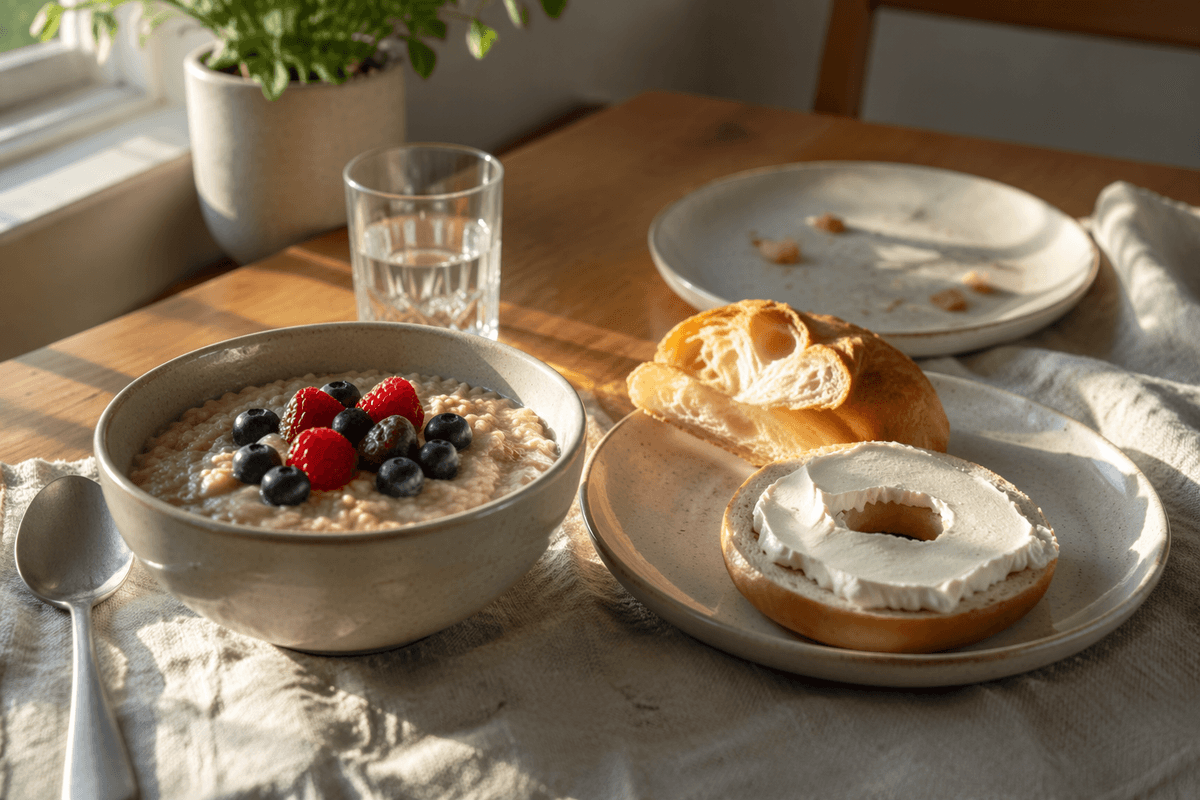
It can happen halfway through the bowl: the same oatmeal that usually feels calming suddenly sits like a lump, or you finish and feel puffy, tight, or oddly full in a way that doesn’t feel satisfying. People often assume they “can’t do oats,” but just as often it’s the way the bowl was built or how fast it was eaten on a rushed morning.
Oats pull in water and thicken, and that gel-like texture is part of why they feel steady. But if the bowl is very thick, very fiber-heavy (chia, flax, bran, berries, plus oats), or eaten quickly with coffee and not much fluid, the same slowing effect can feel like drag. The stomach empties more slowly, gas can build as fiber reaches the gut, and discomfort can show up before you’ve had time to notice any steadiness.
A big hit of sweeteners or dried fruit can make the bowl easier to eat fast, then leave you with a “too full but still want something” feeling. If the pattern repeats, the useful clue isn’t that oatmeal is bad—it’s that this version of the bowl isn’t matching your morning.
Choosing the oat style that fits your mornings
You can feel the difference in the spoon. Some mornings you want something almost drinkable that goes down easily; other mornings you need a bowl that chews back a little. That’s where oat style matters more than people expect, and it’s why “oatmeal didn’t work for me” is sometimes just a mismatch in texture and timing.
Instant packets tend to break down fast and stay thinner, which can make them easy on a rushed stomach but not always as steady—especially if they’re sweetened. Rolled oats usually land in the middle: creamy, predictable, and thick enough to slow the morning down without feeling like paste. Steel-cut oats hold their shape longer, so they often feel the most “staying,” but that same firmness can feel heavy if you’re eating quickly or already a little tense.
The practical test is boring but honest: when does hunger come back, and does your gut feel calm or cramped? The best style is the one you’ll actually repeat—and the one that makes late morning feel quieter.






![Learn to Invest by Yourself [Beat the Market With Investing Basics]](static/image/2026/07/14/0c228cd1-fbac-42e5-9480-a2074601a70d.png)
![6 Best ButterflyMX Alternatives [Video Intercom Systems]](static/image/2026/07/14/dde0dbcd-f7bc-446a-96b8-3fe8a10457ef.png)