The email lands after you already said yes
The message arrives in the middle of an ordinary weekday—Wednesday, July 15, 2026—and it doesn’t match the mental math you’ve been doing since you accepted. Maybe you already paid a deposit, maybe you told your landlord you’re leaving, maybe your parents stopped worrying because the start date looked real. Then the subject line says “update” and the body says “hiring freeze,” “headcount,” “offer rescinded.” It’s not just disappointment; it’s a timing problem with real invoices attached, and the calendar doesn’t pause.
Before any calls, you read it like a contract dispute: what exactly are they canceling, what’s still promised, and what dates are named. If there’s severance, a stipend, or reimbursement language, it usually sits in one sentence you can miss on a first pass. Screenshot the email, save the PDF of the offer, and write down every commitment you already made that now has a fee if you change it.
First 48 hours: stabilize cash and information
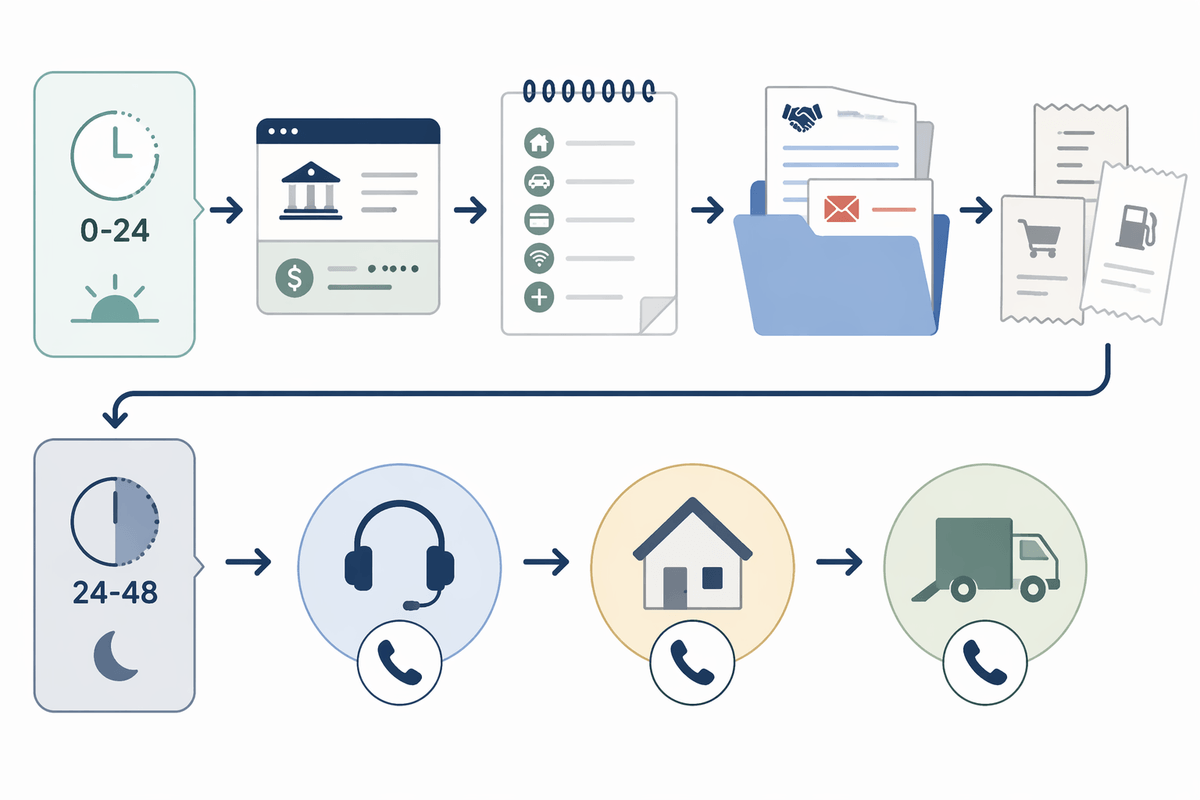
In the first day or two, the goal isn’t to “figure out your life.” It’s to stop money from leaking while the facts are still messy. Open one note and list what will actually clear your bank account in the next 14 days: rent, utilities, car payment, minimum debt payments, insurance, and any moving costs that are already scheduled. Then check today’s balances and pending transactions so you’re working with real numbers, not what you think is there.
Next, pull the offer packet and the rescind email into the same folder and treat it like a short audit. Confirm the start date that was promised, the exact wording around at-will employment, and any reimbursement, bonus, or relocation language that might survive cancellation. If you already spent money, gather receipts now; waiting a week usually means missing documentation or forgetting what was charged to which card.
Finally, make three calls or emails while you still have momentum: the recruiter (ask what they can cover and by when), the landlord or property manager (ask about reversing notice or sublet rules), and any mover or travel vendor (ask for cancellation windows). Speed matters here because many fees change after 24–48 hours.
Your runway number decides what happens next
Once the immediate calls are out, the next pressure point is a single number: how many days you can keep paying “normal life” bills before something breaks. Not the optimistic version with a job starting soon—the version that assumes zero income and a few ugly surprises. Pull up your checking, savings, and any cash you can access without penalties. Then subtract anything you can’t use for this (security deposits you won’t get back yet, a parent’s “maybe,” a credit card you’re already riding).
Now line up the next 60 days of required outflows: rent, utilities, groceries, transportation, minimum debt payments, phone, and insurance. Add one-time items you already triggered: moving fees, travel, a lease overlap, or a cancellation charge you’re still negotiating. The runway math is simple: usable cash divided by weekly required spending. If it’s under 4 weeks, you’re in “prevent late fees and credit hits” mode. If it’s 4–8, you can renegotiate housing and pick a stopgap job more carefully. If it’s over 8, you buy time to keep the search targeted without forcing a bad move.
Housing choices when the move no longer makes sense
The housing decision usually shows up as a calendar trap: you gave notice, the new lease is signed, or your stuff is halfway boxed. If the job is gone, the “right” choice is the one that reduces fixed monthly burn fastest, even if it bruises pride or feels like a step backward. Start with the hard costs that change in the next 10 days: a lease start date, a move-out date, and any nonrefundable deposits. That timeline, not the city you hoped to live in, drives the next call.
If you can still stop the move, price the reversal like an insurance premium. Compare: (a) paying a lease-break fee or forfeiting a deposit versus (b) carrying rent in a new city without income. Many graduates underestimate how quickly two rents plus utilities turns “8 weeks of runway” into “3.” If you’re already committed to a place, ask about subletting, lease reassignment, or a delayed start; property managers often have options, but only before keys are issued and occupancy is recorded.
If none of that works, shrink the commitment, not the search. A month-to-month room, moving back home, or a short-term corporate sublet can feel temporary and awkward, but it converts a long fixed lease into a controllable line item. The goal is to keep one address stable enough to interview, keep mail and insurance clean, and avoid a second relocation bill while you wait for the next offer to be real.
Bills and debt: keep credit damage off the table
Once housing is narrowed to something survivable, the next failure point is a quiet one: a single missed payment that turns into late fees, penalty APR, or a 30-day delinquency on a credit report. Pull every bill with a due date in the next 30 days and separate “credit-reporting” obligations (credit cards, auto loans, student loans, personal loans) from “service shutoff” obligations (phone, internet, utilities). The constraint is timing: even if the total dollars are manageable, misaligned due dates can drain an account before rent clears.
Then triage with minimums and calls. Keep every account current with at least the minimum payment, even if spending drops to bare-bones. If cash won’t cover that, contact lenders before the due date and ask for a temporary hardship plan, due-date change, or reduced payment arrangement. Avoid “buying time” by floating essentials on a maxed card; utilization spikes can make the next apartment, car insurance rate, or co-signer conversation harder.
Health coverage gap: pick the least-bad bridge

After you’ve protected credit, the next surprise expense is medical risk: one urgent-care visit can erase a week of runway. Start by writing down your current coverage end date (or the date your student plan expires) and whether you have prescriptions or ongoing care that can’t pause. That timeline determines how aggressive you need to be.
COBRA is usually the cleanest continuation, and also the most expensive—ask HR for the monthly premium and the deadline to elect. If the price blows up your budget, check the ACA Marketplace for a Special Enrollment Period tied to losing coverage; subsidies can make the math workable. If income is truly near-zero, Medicaid may be available in your state. Treat short-term plans as a last resort: cheaper, but coverage gaps can be costly when the bad luck hits.
Stopgap income without losing the longer search
Once insurance is handled, the next temptation is to grab the first paycheck-shaped thing and call it “solved.” The constraint is energy: a 40–50 hour stopgap that pays a little can quietly consume the hours you needed for applications, interviews, and follow-ups. So treat interim work like a budget tool, not an identity shift. Write down the weekly cash gap after your cut-down spending plan, then translate it into a target: “I need $350/week net for 8 weeks,” not “I need a job.” That target keeps you from overcommitting.
Favor options with fast onboarding and predictable scheduling: campus-adjacent admin temp roles, staffing agency placements, tutoring, barista/retail shifts with fixed hours, or gig work you can cap at a weekly limit. If you have a marketable skill, project-based freelancing often protects the search better than shift work, but only if you set scope and payment terms up front so one “small” project doesn’t sprawl.
Interviewing works best when the stopgap is honest and bounded. A simple line—“I’m working interim hours while I search for a full-time role”—reduces anxiety about gaps, and it gives you permission to keep weekdays open for calls. The win isn’t pride; it’s staying liquid without drifting away from the job you actually wanted.
A revised plan you can live with for 60 days
By this point, the plan stops being “fix everything” and becomes a 60-day operating agreement with yourself and anyone helping you. Put four dates on one page: when rent is due, when minimum debt payments hit, when health coverage changes, and when your cash balance crosses a line that would force a credit mistake. The constraint is that most of these deadlines don’t wait for an interview cycle.
Then build a weekly rhythm that matches your runway: two job-search blocks you don’t trade away, one admin block (claims, reimbursements, lender calls), and a capped income block that covers the gap you calculated. If a move is still unresolved, set a hard decision date within 7–10 days, because every extra week of uncertainty usually costs money. At day 30, reassess with actual spending, not hope, and tighten or extend from there.