Long-haul misery isn’t inevitable—it’s the wrong setup
I hesitated at the gate with a half-inflated neck pillow clipped to my backpack and a coffee I didn’t really want at 9:10 p.m. The flight clock said 11h 45m, and I already knew which part would break me: the third hour, when the cabin settles and my “I’ll just wing it” plan stops working. That’s usually when long-haul misery feels inevitable—right before you realize it’s mostly setup.
Most comfort buys fail because they’re universal solutions to very specific constraints: your shoulder width vs. the headrest wings, your leg length vs. the seat pitch, your airline’s rules on inflatable footrests, your carry-on space vs. bulky foam. A $90 pillow can be worse than a rolled hoodie if it forces your head forward; a seat cushion can help hips but steal precious thigh support in tighter economy seats. The trade-off isn’t “comfort vs. money”—it’s comfort vs. compatibility, and you don’t discover incompatibility until you’re trapped in row 38.
What works for mid-budget remote workers (10–14 hours, a few times a year) is a small kit that targets your worst trigger, not a suitcase of wishful thinking. If you wake up with neck pain, prioritize head stability; if you arrive swollen and foggy, prioritize circulation and sleep conditions. Before you buy anything new, decide what you’re trying to fix on this specific flight—then pack only what can actually fit and be used, fast, in a narrow seat.
Start with your biggest discomfort trigger
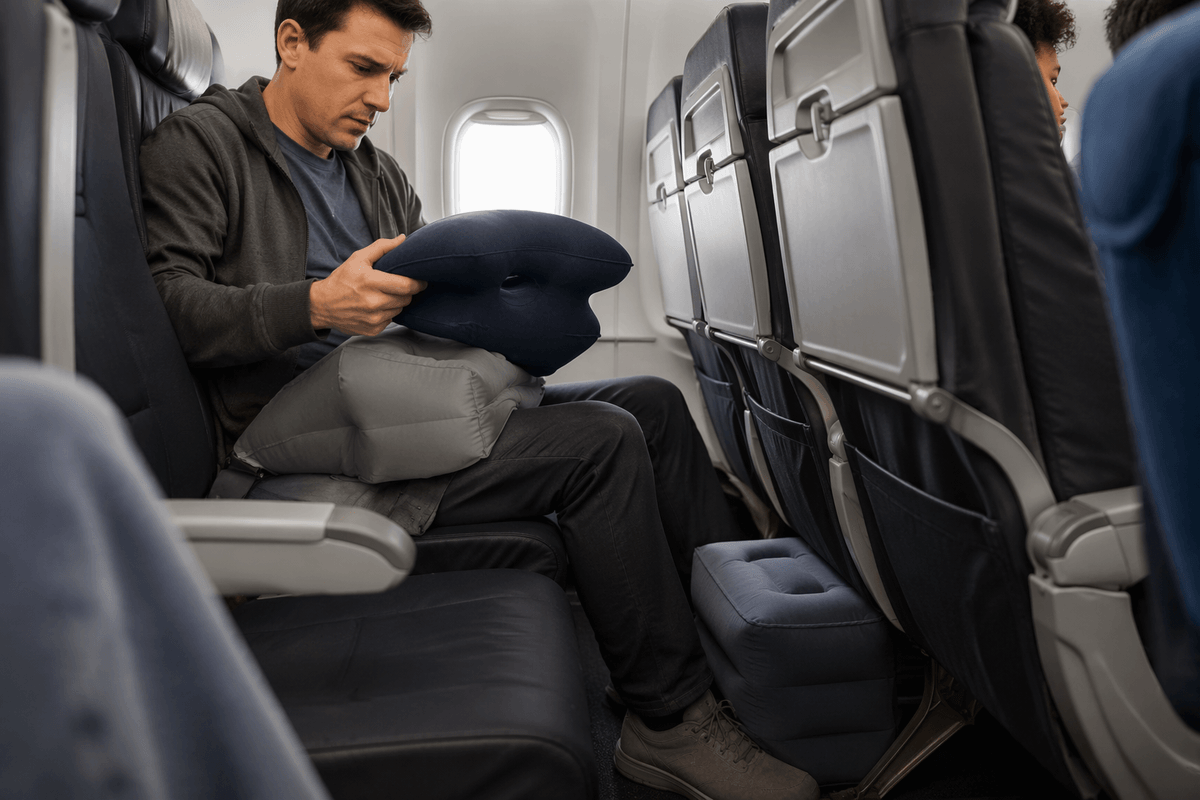
Two hours in, the seatbelt sign stayed on, and I found myself doing that awkward dig through the seat-pocket zone with my elbows pinned. I had three “comfort” items within reach, and none of them fixed the thing that was actually getting loud: my neck, twitchy and unsupported every time my head drifted. That’s the moment I try to name the trigger in plain language, not shopping language.
Pick one primary failure mode for this flight: “neck won’t stay neutral,” “lower back collapses,” “legs swell,” “cabin noise keeps me half-awake,” or “dry air turns me into a headache.” The trade-off is ruthless: the more triggers you try to solve at once, the more bulky, fiddly gear you pack—and the less likely any of it fits your seat’s real constraints (headrest shape, pitch, foot space, neighbor tolerance). A seat cushion can feel great on a wide domestic seat, then steal thigh support in tight economy; an inflatable footrest can help shorter legs but may be banned or impossible with under-seat bags.
If you can’t decide, use a quick tiebreaker: what makes you least functional after landing? Neck pain tends to be acute and immediate; circulation issues show up as swelling and fogginess; noise and light sabotage sleep even when your posture is fine. I’ll accept “tolerable” on secondary annoyances if it means the one big problem gets a real, compatible fix.
Sleep upgrades that actually work
At 1:27 a.m., I watched the cabin lights dip to “blue mood lighting,” and the guy across the aisle was already asleep with his mouth open like it was a couch nap. I’d reclined maybe two inches, my hoodie was bunched behind my neck, and every time my chin dropped I jolted awake. That’s when it became obvious: I didn’t need “better sleep stuff,” I needed fewer, more compatible upgrades that held my body in one boring position.
The highest ROI sleep upgrade on long-haul is head stability, not softness. U-shaped pillows often push your head forward (great for lounging, bad for airway and neck), while a firmer wrap-style or scarf-like support tends to keep your chin from collapsing—if it fits between your jaw and the seat’s headrest wings. The trade-off is portability: compressible foam packs larger but holds shape; inflatable packs small but can feel bouncy and noisy when you shift. If you’re broad-shouldered or your headrest wings don’t adjust, skip anything “tall” that forces your head up and forward.
Second is temperature control, because you can’t out-hack a cold cabin at hour six. I’ve had more usable sleep from a light merino layer and warm socks than from any gadget that needs perfect legroom or tray-table geometry. This works best for people who run cold or wake easily; if you sleep hot, the upgrade is the opposite—ditch bulky blankets and prioritize a breathable layer you can peel off fast during meal service without fully waking up.
Noise, air, and light control kit
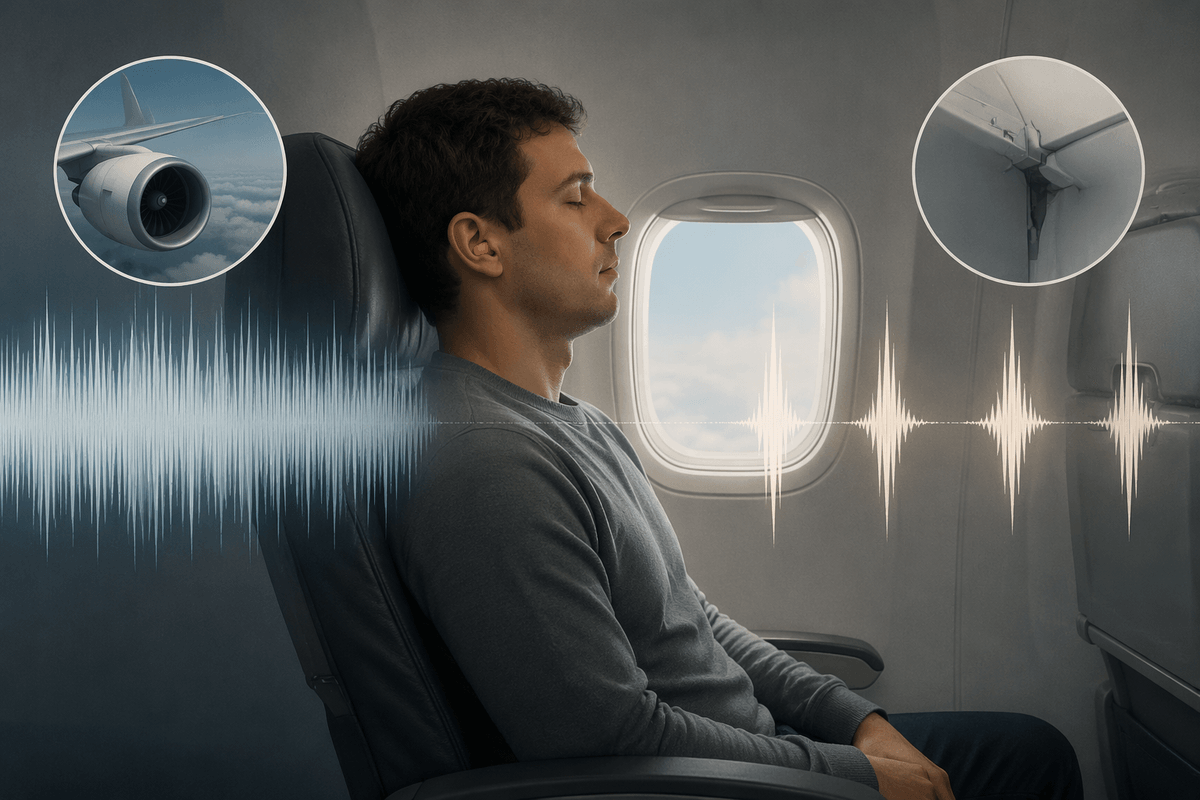
Somewhere over the Atlantic, I pulled my earbuds out to take a sip of water and realized the “quiet” cabin wasn’t quiet at all—just a different mix of sounds: engine hiss, a galley cart clunking, and one bright screen two rows up. I’d packed a fancy neck support, but my actual sleep-killer was sensory leakage. The fix wasn’t more gear; it was a small, boring control kit I could deploy without a full rummage under the seat.
If you’re choosing one noise solution, decide whether you hate constant sound or sharp sound. Active noise-canceling headphones are best at the steady engine wash and help remote workers who want to watch a movie at lower volume, but they’re a trade-off: bulky case, battery anxiety, and they can be awkward if you sleep on your side. For sleep, I’ve had more consistent results from basic foam earplugs (cheap, zero charging) plus a thin headband-style set of wired earbuds as backup—wired looks old-school, but it works when Bluetooth decides to glitch at hour eight.
Light control is smaller than people think: a structured eye mask that doesn’t press your eyelids beats a soft one that leaks at the nose bridge, especially when the cabin “dims” but never goes dark. Air is the quiet spoiler—dryness turns into scratchy throat, then micro-wakeups—so I pack saline spray and lip balm before any “personal fan.” If you run cold, use the overhead vent sparingly; if you run hot, aim it at your chest, not your face, unless you enjoy waking up dehydrated.
Pain prevention in tight seats
At hour five, the meal trays were finally cleared, and I tried to reset my posture—only to realize I’d been bracing my knees against the seat in front of me like a bad habit. My hip flexors felt tight, my lower back had that dull “compressed” ache, and the armrest was already negotiated territory. Tight seats don’t just make you uncomfortable; they quietly lock you into one position until something starts complaining.
The most reliable pain prevention isn’t a gadget—it’s changing the load path. I’ll take a small, dense lumbar roll (or even a folded scarf) over a thick seat cushion, because cushions can steal thigh support and make your knees ride higher, which backfires fast in economy pitch. If your lower back collapses when you recline, add support before you get sore; once the ache shows up, you’re chasing it. For taller travelers, the trade-off is brutal: keeping knees neutral often means sliding your feet slightly back under the seat, but that competes with your personal-item space.
When the seatbelt sign is off, I do a 60-second routine: stand, straighten one leg at a time, a few calf raises, then sit back down and reset shoulders down (not back). Aisle seats make this realistic; window seats make it aspirational. If you’re packing one “pain” item, pick what helps you reset quickly, not what looks impressive in a product photo.
My default setup for any long flight
In the boarding line, I did the quick pocket-check: earplugs in the coin pocket, eye mask in the hoodie pouch, charger already plugged into the power bank. My backpack was zipped, and I could still reach the two things that matter at hour seven without doing the under-seat yoga. That’s my tell that the setup is realistic, not aspirational.
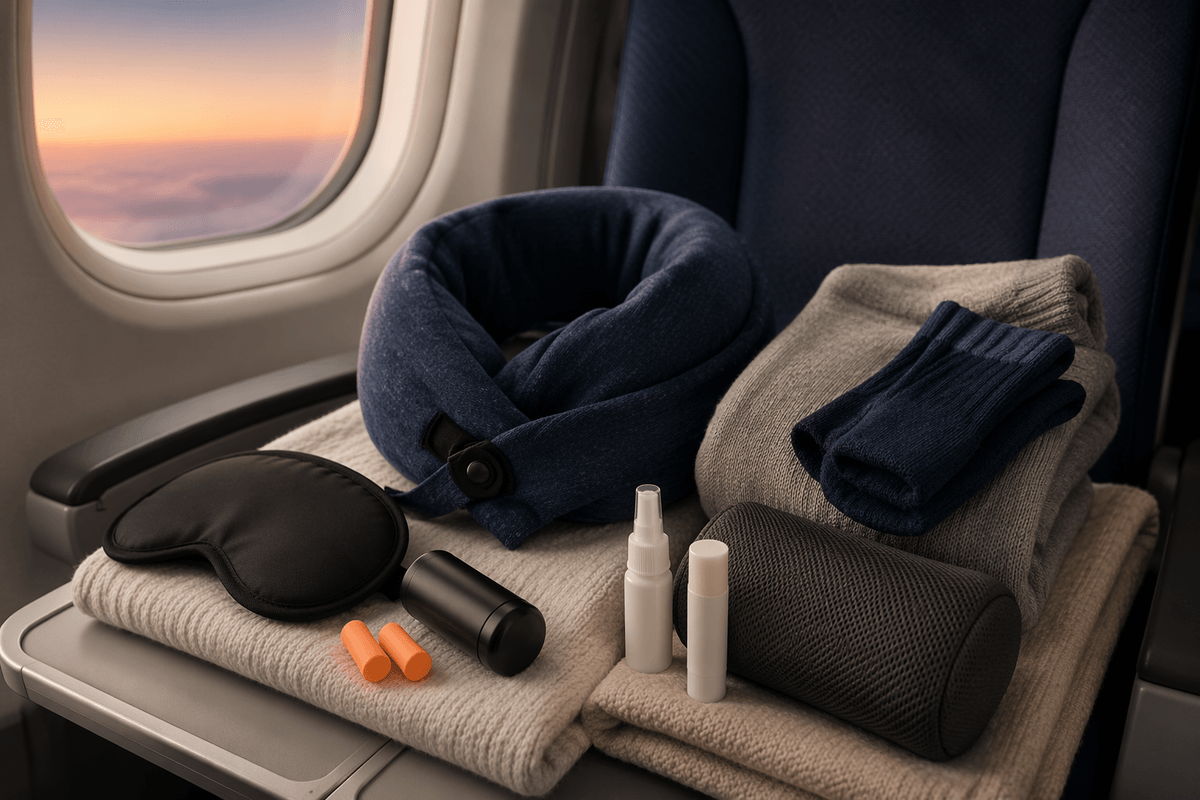
My default kit is boring on purpose: foam earplugs + a structured eye mask, a compact neck support that doesn’t push my chin down (wrap/scarf style beats tall U-shapes for me), a thin merino layer, warm socks, and a small lumbar roll (or a scarf folded dense). I’ll add saline spray and lip balm before I’ll add a foot hammock, because “dry and half-awake” ruins sleep more reliably than “feet slightly unsupported.” If you run hot or hate anything touching your face, swap the merino for a breathable tee and prioritize airflow; if you’re broad-shouldered, go smaller on the neck gear and lean on headrest wings plus a hood.
The trade-off I’m willing to make is space for certainty: one neck solution, one noise solution, one light solution, one back reset. Anything that needs perfect seat pitch, tray-table geometry, or permission from a crew member usually stays home. If you’re shopping last-minute, buy the items that still work when you’re tired and clumsy—then stop, even if the ads keep promising “business class sleep.”