The moment the board says “we’re done with ButterflyMX,” the calendar starts quietly tightening. A resident move-in is already scheduled, a delivery carrier is complaining, and the fire marshal’s last note is still in someone’s inbox. Everyone expects a swap—new panel, new app, lower bill—without a stretch of weeks where the front door feels unpredictable. The problem is the first failure rarely looks like a dramatic outage; it looks like small access delays that trigger work orders, angry emails, and staff time that wasn’t budgeted.
The first thing that tends to break is the handoff between what’s on the wall and what’s in people’s pockets. Changing providers can mean reusing wiring that isn’t clean, losing directory data, re-enrolling every resident, and re-learning guest entry rules under pressure. Even if the hardware installs on time, the operational changeover—credentials, call routing, and support response—often becomes the real bottleneck, especially when a contract end-date or installer availability forces the schedule.
Start with the outcome you actually need
By the next board meeting, the conversation usually drifts toward features—package rooms, facial recognition, “better video”—because it feels concrete. The more practical move is to name the single outcome that can’t wobble during the changeover. Is it “every resident can reliably buzz themselves in from the elevator,” or “staff can grant access without hunting for a login,” or “vendors have a predictable way to enter between 9–5”? Pick one and let it bully the rest of the discussion, because trying to optimize everything tends to create a messy rollout and a longer training tail.
Once that outcome is explicit, the trade-offs get less emotional. A property that needs after-hours delivery control may accept a clunkier resident UI if scheduling and audit history are tight. A building with high turnover may tolerate fewer integrations if bulk onboarding is fast and support is responsive. Put timing and labor on the table, too: if you can’t afford two weeks of “some residents aren’t getting calls,” then migration tooling, directory import, and re-enrollment workflows matter more than the spec sheet.
Price isn’t the number—contracts and recurring fees are

The budget line item that gets everyone nodding is the new panel price, because it’s easy to compare. Then the proposal lands and the “monthly” turns into a stack: per-door licensing, per-unit or per-resident fees, cellular data, cloud video storage, and support tiers that decide how fast a real outage gets a human response. If the building needs elevator control or an access control integration, that can trigger another subscription on top of the intercom bill, and the total cost stops behaving like a one-time upgrade.
The contract terms are where the decision tightens. A longer commitment might buy a lower rate, but it also sets the clock against your next capital plan and your tolerance for poor mobile reliability. Watch for auto-renewals, annual escalators, “free hardware” that’s really amortized, and charges for directory imports or bulk re-enrollment. If the board wants the option to switch again in 18 months, the cheapest quote on paper can be the most expensive exit.
Your building’s wiring decides what’s realistic
After the contract math, the next surprise is physical: the “simple swap” depends on what’s behind that entry panel. Older properties often have a mix of legacy door-strike wiring, inconsistent power, and a handset system that was patched over for years. If the new vendor assumes clean Ethernet at the door, the install turns into a construction decision—new conduit, wall repairs, and a schedule that clashes with resident access. Even a modest rewire can add thousands and push the go-live date past your cancellation window.
This is where options narrow fast. If you only have two-conductor cabling to the door, some systems will force a controller relocation or a power retrofit to keep locks stable. If there’s already Cat5/Cat6 to the entry, you can be pickier about panels and camera quality without opening walls. Before you shortlist anything, have an installer tone the lines, confirm power at the frame, and map which doors share hardware—because one “small” wiring constraint can quietly dictate the whole project.
Resident experience: mobile entry reliability under pressure
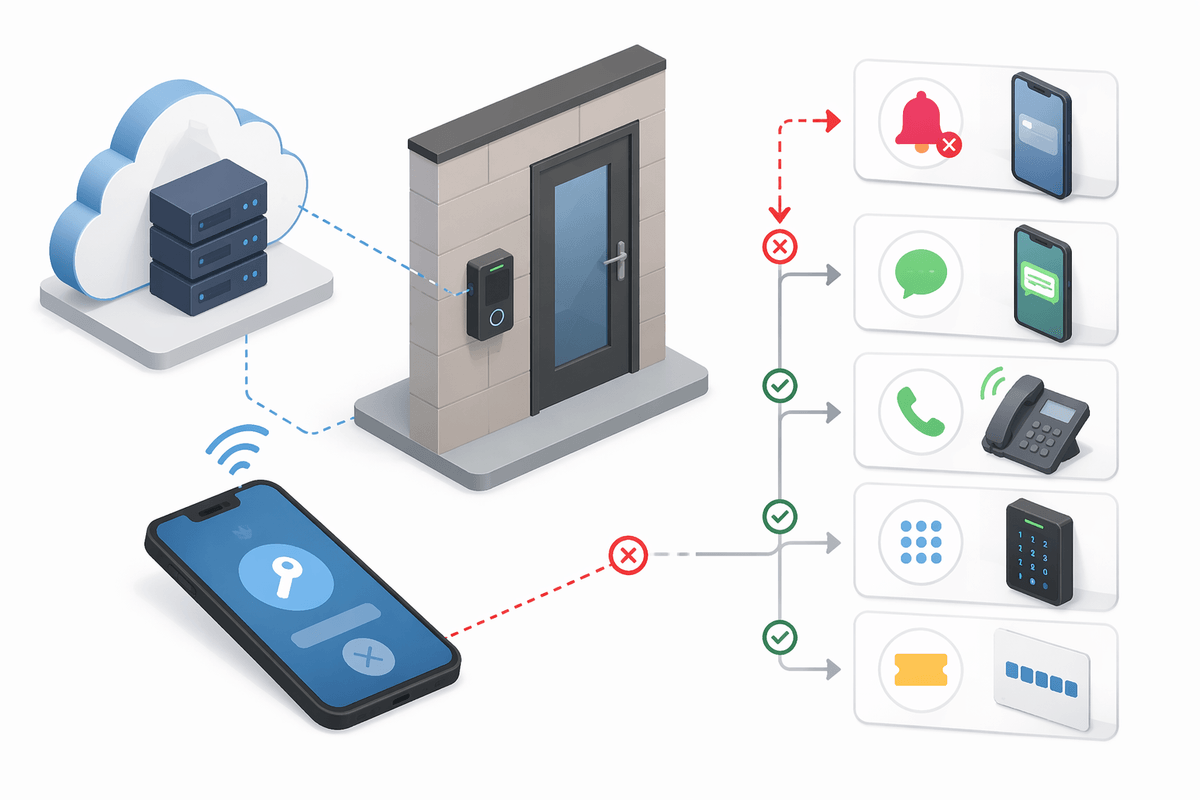
The first week after cutover is when residents stop grading features and start grading latency. A call that rings two seconds late, a push notification that arrives after the visitor has walked away, or a video feed that won’t load on LTE becomes the story of the whole project. It’s worse during predictable spikes—school drop-off, move-in Saturdays, holiday deliveries—because the front door becomes a queue, and staff gets pulled into “can you just open it for me?” interruptions that weren’t part of the plan.
Reliability pressure usually exposes a few practical constraints at once: weak cellular signal at the vestibule, iOS/Android notification settings residents won’t troubleshoot, and an app that behaves differently when the phone is on Wi‑Fi versus mobile data. Ask vendors to explain their fallback when a push fails (SMS, phone call, keypad PIN, temporary code), and what the on-site workaround is when the cloud is slow. If the only answer is “residents should reinstall the app,” budget for a rough month.
It also helps to test with the least cooperative phones, not the newest ones. A building with 120 units doesn’t have 120 identical devices, and the resident who can’t get in will be the one holding the door. Before committing, run a live pilot at the busiest entrance for a week, measure missed calls and time-to-unlock, and make support show how they troubleshoot in real time—because that’s what residents will remember.
Security and privacy choices you can’t undo later
After a pilot, the next emails tend to shift from “it works” to “who can see what.” The friction shows up fast when a vendor demo casually enables cloud recording or staff-wide access, because boards realize they’re deciding retention, not just entry. If you don’t set limits now, the default becomes policy, and changing it later can mean a re-sign, a new tier, or losing footage right when an incident happens.
Lock in three things before you sign: who has admin rights (and whether it’s role-based), how long video or call logs are stored, and whether data can be exported if you switch vendors. Also ask where it’s hosted, what triggers law-enforcement sharing, and how resident phone numbers are protected from directory exposure. The constraint is usually cost: tighter controls and shorter retention often sit behind “enterprise” pricing, but the cheap plan can quietly create permanent risk.
Six alternatives worth shortlisting for different properties
At this point the shortlist tends to shrink on its own, mostly because the building’s constraints start saying “no” before the board does. The fastest way to keep momentum is to line up a few realistic candidates that match how the property actually runs, then let installers and references do the arguing. Six names come up often enough to be worth pricing in parallel, but they fit different pain points—and they fail differently when the pressure hits.
For a straightforward cloud intercom swap, Akuvox and 2N usually land well when you already have decent wiring and want more hardware choice. If access control and doors/elevators are the real scope, Brivo or Openpath (Avigilon Alta) can make the intercom feel like an add-on to a broader system—just expect recurring per-door licensing to stack. If the board is pushing hard on cost, DoorBird sometimes pencils out, but verify support responsiveness and how “mobile-first” behaves on bad cellular days. If you’re trying to preserve older on-site behavior while modernizing, Aiphone (with the right IP platform) can be a safer operational bridge, with less app dependence but more install planning.
Don’t ask each vendor “are you better than ButterflyMX.” Ask what happens when a resident’s push fails at 6:15pm, what the non-app fallback is, and what the exit looks like if you change direction in two years—because that’s where these six separate into workable and painful.
Build your shortlist, then force the hidden trade-offs
Once you have three to five candidates, stop letting demos blur together and put them in the same box: one spreadsheet, one installer walk, one set of tests, one deadline. Add a column for “what fails gracefully” (push delay, cloud slowdown, dead phone) and require a non-app path for entry, even if it costs more. If the building can’t tolerate a bad week, pay for the support tier that answers in minutes, not “next business day,” and treat that as part of the real price.
Then force the uncomfortable choices in writing: who owns the hardware at term end, what it costs to add doors or fobs later, how data export works, and what the renewal language actually does after year one. Ask for the full fee schedule, not the marketing quote, and make vendors show the admin workflow for resident onboarding and role-based permissions. The shortlist should feel smaller afterward—because the trade-offs finally have numbers and consequences.





![6 Best ButterflyMX Alternatives [Video Intercom Systems]](static/image/2026/07/14/dde0dbcd-f7bc-446a-96b8-3fe8a10457ef.png)